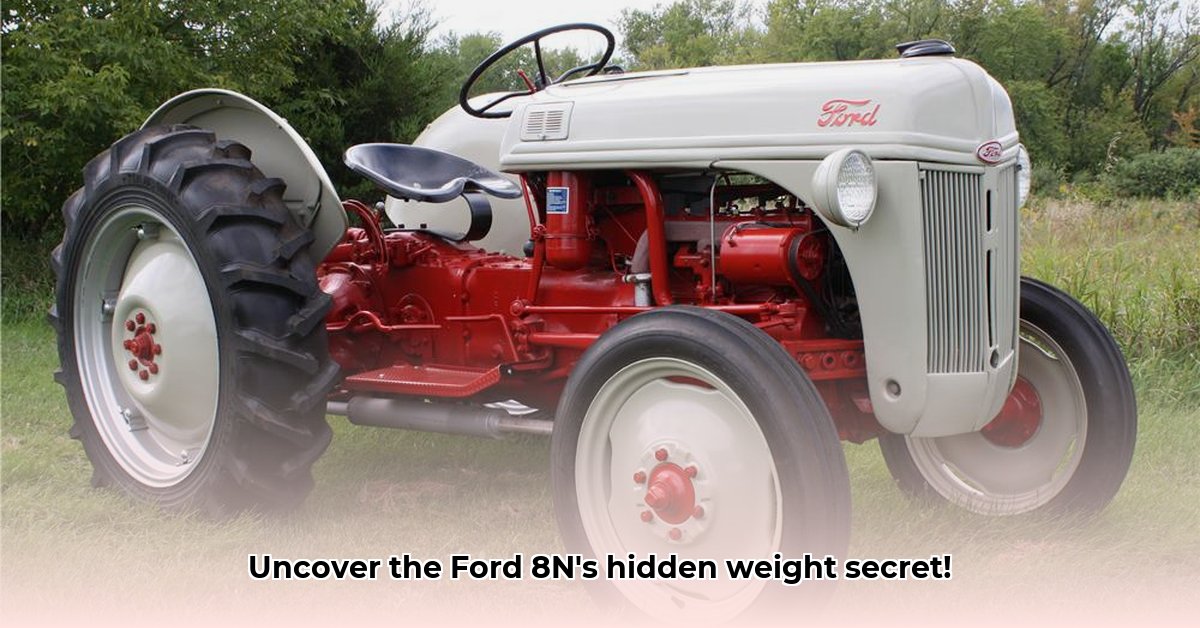
How Much Does a Ford 8N Tractor Weigh?
The weight of a classic Ford 8N tractor isn't a single, definitive number. It varies depending on several factors, much like a car's weight changes based on fuel level and added accessories. A key variable influencing weight is the fuel level in the 12-gallon tank. Additional equipment like a front-end loader or three-point hitch also significantly impact the overall weight. Even the tractor's condition – rust, added reinforcements from repairs – plays a role. How much does a Ford 8N weigh, you ask? A reasonable estimate for a standard 8N is between 2,800 and 3,200 pounds. However, for precise measurement, using a scale is necessary. For more information, check out this detailed guide: Ford 8N Specs.
Beyond the Weight: Understanding the Ford 8N's Specifications
Understanding the Ford 8N's weight is just one element of understanding its capabilities. Let's delve deeper into its key features:
Key Features of the Ford 8N:
| Feature | Details | Significance |
|---|---|---|
| Engine Type | 124 cubic inch gasoline engine | Simple design, facilitating easier maintenance. |
| Horsepower (Drawbar) | Approximately 20 horsepower | Lower horsepower compared to modern tractors; suitable for lighter tasks. |
| Transmission | 3-speed manual | Basic, but known for reliability. |
| Fuel Tank Capacity | Roughly 12 gallons | Significantly impacts the overall weight of the tractor. |
| Wheelbase | 66 inches | Contributes to its maneuverability in confined spaces. |
These specifications highlight the Ford 8N's capabilities within the context of its era. While its power and size may appear modest compared to modern agricultural equipment, its historical impact is undeniable.
The Ford 8N's Legacy and Continued Relevance
The Ford 8N's affordability and readily available parts contributed to its immense success: approximately 500,000 units sold between 1947 and 1952. This widespread adoption profoundly influenced agricultural practices globally. While not ideal for large-scale operations or demanding terrain due to its low horsepower and lack of power steering, its simplicity makes maintenance relatively easier than many modern tractors. Its suitability for smaller farms or lighter tasks ensures continued relevance today. The environmental impact must also be considered: Though its simple design may seem environmentally friendly, its lower fuel efficiency compared to modern counterparts is a key factor.
Assessing Ford 8N Fuel Efficiency for Sustainable Farming
The Ford 8N's fuel efficiency, surprisingly, is relevant to contemporary sustainable farming practices. Its uncomplicated design and readily available parts simplify maintenance, minimizing downtime and contributing to overall environmental efficiency.
Factors Influencing Fuel Consumption:
- Engine Condition: A well-maintained engine consumes less fuel. Regular servicing is vital.
- Workload: Demanding tasks like plowing heavy soil require more fuel than lighter tilling.
- Terrain: Uneven or hilly terrain increases fuel consumption.
- Implement Type: Different farming implements have varying power requirements.
Measuring Fuel Efficiency:
- Completely fill the fuel tank. Record the initial fuel level and odometer reading (or start a timer).
- Perform a specific task (e.g., plowing one acre).
- Afterward, record the final fuel level and odometer reading (or stop the timer).
- Calculate the fuel used (initial level – final level).
- Divide the fuel used by the completed work (e.g., acres plowed or hours worked) to determine fuel consumption per unit of work.
Repeat this process under varied conditions for a more comprehensive assessment. Maintaining detailed records is crucial for an accurate evaluation.
This precise method provides a realistic measure of the Ford 8N's fuel efficiency relative to its workload. While its fuel economy per horsepower might surpass some modern tractors, it's crucial to weigh this against overall work output. A modern tractor may consume more fuel per hour, but it completes significantly more work. For small-scale farms, the Ford 8N's efficiency per task presents a notable sustainability advantage. Its low cost of operation and maintenance further enhances its appeal for environmentally conscious farmers.